
Beyond Clean Energy: Why Grid Security Has Become the Defining Factor of the Global Energy Transition

By EnergyChannel Inside

For years, the global energy transition was driven by a simple metric: how many renewable megawatts could be added to the power system. The rapid expansion of solar and wind energy focused on scale, speed, and cost reduction. But as renewables gain a dominant share in electricity generation, a new and decisive challenge has emerged one that is often invisible to the public: grid security and reliability.
Today, generating clean energy is no longer enough. The real challenge lies in integrating renewables safely, reliably, and resiliently into national power systems. In this new reality, technology has moved from a supporting role to the backbone of the energy transition.
To understand how this shift is unfolding in practice, EnergyChannel Inside analyzed large-scale solar projects around the world that are redefining what energy security means in a renewable-driven power system.
The New Challenge of Utility-Scale Solar
The rapid growth of solar energy has delivered undeniable environmental and economic benefits. However, it has also exposed structural weaknesses in traditional power grids, which were designed for centralized, synchronous, and predictable generation, such as hydro and thermal plants.
Large-scale solar plants operate under very different conditions:
variable generation profiles;
reliance on power electronics;
advanced digital control systems;
continuous real-time interaction with the grid.
Without appropriate technologies, these characteristics can lead to frequency instability, voltage fluctuations, dispatch limitations, and increased blackout risks. This is where concepts once confined to academia or system operators have become critical: grid-forming capabilities, ancillary services, synthetic inertia, advanced controls, and cybersecurity.
Technology as the Backbone of the New Power System
A successful energy transition requires systems that can actively manage, stabilize, and protect the grid. This means integrating solar generation, energy storage, digital control platforms, and secure communication into a unified operational architecture.
Among the companies leading this global transformation is SMA Solar Technology, whose role in large-scale projects goes far beyond supplying inverters. The company delivers integrated system solutions capable of:
stabilizing grids with high renewable penetration;
providing grid-forming and grid-support services;
integrating large-scale battery storage;
protecting critical infrastructure against cyber threats.
These technologies enable solar power plants to evolve from passive generators into strategic assets for national energy security.
Cybersecurity: The Invisible Risk of the Energy Transition
As power systems become increasingly digitalized, cybersecurity risks grow in parallel. Large solar plants connected to remote control systems, cloud platforms, and grid operators are now part of countries’ critical infrastructure.
Cyberattacks on energy systems are no longer hypothetical they are a documented reality worldwide. As a result, utility-scale renewable projects now require:
encrypted communication protocols;
strict access control;
continuous software updates;
compliance with international cybersecurity standards;
real-time threat monitoring.
Across the projects reviewed by EnergyChannel Inside, cybersecurity is embedded from the design phase not added as an afterthought. This approach is essential to ensure operational continuity, data protection, and institutional trust.
Global Case Studies Redefining Grid Stability
Scotland: Grid Stability in a Renewable-Dominated System

In the United Kingdom, the Blackhillock large-scale battery storage project in Scotland has become a benchmark for grid stability. Equipped with advanced control systems and grid-forming inverters, the facility provides:
frequency support;
rapid response to disturbances;
stability services traditionally supplied by fossil-fuel plants.
The result is a more resilient grid capable of operating with very high levels of renewable energy, reducing dependence on thermal generation without compromising system security.
Chile: Reliable Solar Power in Extreme Conditions

In Chile’s Atacama Desert one of the most demanding environments on Earth large hybrid solar-plus-storage projects are reshaping the country’s energy matrix. By integrating utility-scale batteries, these systems:
store solar energy during peak production;
dispatch electricity during evening and critical demand periods;
reduce grid congestion;
increase system predictability.
These projects demonstrate that solar energy can be firm, controllable, and reliable, even in remote regions and extreme climates.
Germany: Power Systems Operating with 100% Renewables
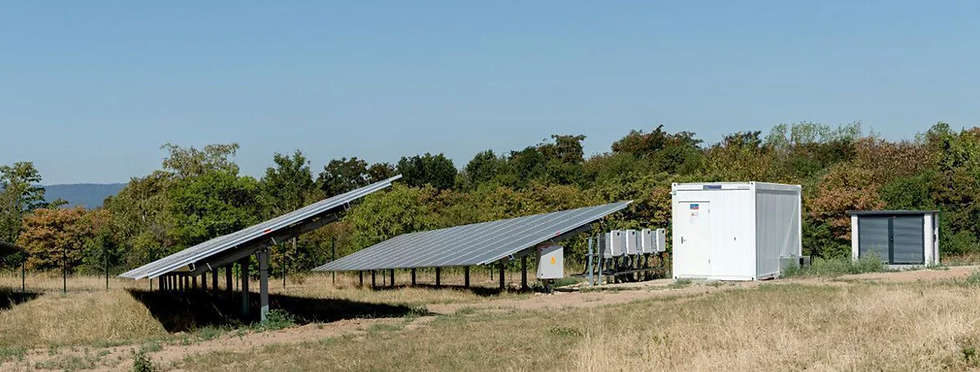
In Europe, pilot projects have proven something that once seemed unattainable: local grids operating stably with 100% renewable energy, including islanded operation.
By combining grid-forming technology, advanced controls, and energy storage, these systems maintain stable frequency and voltage showing that a fully renewable power system can deliver the reliability modern economies depend on.
Why Grid Security Defines the Success of the Energy Transition
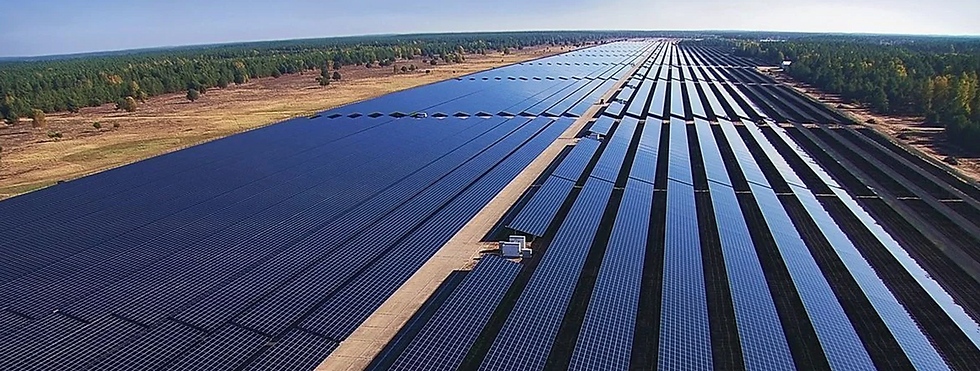
International experience makes one fact clear: there is no successful energy transition without grid security. Countries that overlook this reality face serious risks, including:
widespread outages;
regulatory instability;
reduced investor confidence;
industrial disruption;
delayed decarbonization.
Conversely, secure, digital, and resilient power systems:
attract long-term investment;
support economic growth;
enable industrial electrification and clean mobility;
strengthen energy sovereignty;
accelerate climate targets sustainably.
Conclusion: The Future of Energy Must Be Clean and Secure
The next phase of the energy transition demands a shift in mindset. The debate is no longer about generating more clean energy, but about integrating it intelligently, securely, and reliably.

Large-scale solar projects that incorporate advanced technology, grid-forming capabilities, and cybersecurity prove that the future of energy will not only be renewable it will be secure, digital, and resilient.
Beyond Clean Energy: Why Grid Security Has Become the Defining Factor of the Global Energy Transition

Comments