
Inside one of Brazil’s largest operations: how Coca-Cola FEMSA Brazil integrates scale, technology, and sustainability

SPECIAL INTERVIEW | ENERGYCHANNEL
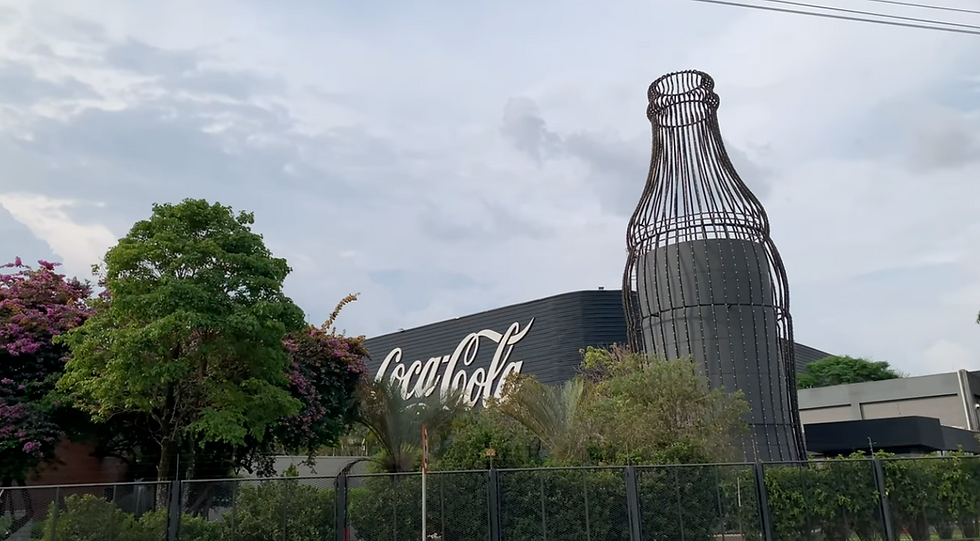
By Ricardo Honório
In a country of continental dimensions like Brazil, operating efficiently at scale requires more than robust infrastructure it demands operational intelligence, technological integration, and a forward-looking strategic vision.

In this special EnergyChannel interview, we spoke with Renata Zargolin, Environmental Manager at Coca-Cola FEMSA Brazil, to understand how one of the world’s largest beverage operations balances growth, logistics efficiency, and environmental commitment in a rapidly evolving consumer and economic landscape.
Scale as a challenge and a competitive advantage
With an operation reaching approximately 93.9 million people through around 498,000 points of sale, Coca-Cola FEMSA Brazil has built one of the most complex logistics structures in the country. It includes 11 industrial plants and 54 distribution centers, forming a network that must operate with near-surgical precision.
According to Renata Zargolin, the key challenge lies in integration:
“Maintaining an integrated and efficient operation, ensuring supply, capillarity, and agility across different regions of the country.”
To sustain this level of performance, the company relies on a strategic tripod: continuous operational evolution, close customer relationships, and infrastructure expansion, combined with a strong push toward digitalization and new technologies.
Smart logistics: where physical meets digital
The company’s logistics efficiency is not only about physical scale, but about how it connects to the digital world.
It is building a logistics chain that combines strategically positioned physical assets with data-driven and AI-based solutions.
Platforms such as Juntos+ and Juntos+ Advisor are central to this transformation, enabling advanced analytics that directly impact point-of-sale execution and commercial decision-making.
Additionally, fleet modernization including the adoption of electric trucks reinforces both efficiency and commitment to the energy transition.

Energy and decarbonization: clear targets, consistent execution
Energy strategy now plays a central role in the company’s overall approach.
Key commitments include:
100% renewable energy usage50% reduction in Scope 1 and 2 emissions by 2035 (baseline 2015)
In practice, progress is already significant:
100% of manufacturing plants operate on renewable energy
83% of distribution centers have reached the same level
These initiatives are combined with investments in fleet electrification, accelerating the decarbonization of operations.
The “phygital” transformation
One of the most relevant concepts highlighted by Renata Zargolin is the consolidation of a “phygital” operation the integration of physical and digital.
In this model, technology moves from a supporting role to becoming the core of operations.
Tools like Juntos+ Advisor already reach more than 70% of the sales force across Brazil and Mexico, expanding analytical capabilities and enabling faster, more accurate decisions.
This transformation directly impacts:
operational efficiency
customer relation
ships portfolio evolution
Sustainability as a business model not a narrative
At Coca-Cola FEMSA Brazil, sustainability is not treated as a parallel agenda, but as a structural part of the business.
The strategy is built on four main pillars:
water efficien cycircular - economy waste - management climate action
One of the most emblematic indicators is water usage: the company operates at 1.36 liters of water per liter of beverage produced, one of the most efficient levels in the industry.
The Jundiaí facility the company’s largest globally in volume has received AWS (Alliance for Water Stewardship) certification, reinforcing best practices in water management.
Additionally, initiatives such as Olhos da Serra:
preserve 10,235 hectares in the Serra do Japi contribute to replenishing approximately 5 billion liters of water annually
On circular economy and climate, commitments include:
increased use of recycled resin in PET pack agingzero-waste certification across 100% of plantsongoing reduction of greenhouse gas emissions
The future: digital, sustainable, and consumer-centric
Looking ahead, the company remains focused on four main fronts:
strengthening commercial execution advancing digitalization continuous portfolio evolution progress in sustainability
At the same time, it continues investing in physical expansion new lines, warehouses, and distribution centers while increasing the use of artificial intelligence to support sales and enhance the consumer experience.
Consumption transformation: a new market in formation
For the company, the Brazilian market is already undergoing a structural transformation.
Digitalization, changing habits, and the demand for convenience are reshaping consumption dynamics.
In this context, the strategy is clear: strengthen the digital platform, expand the use of technology, and deepen relationships with customers positioning the company not just as a product distributor, but as an integrated platform for business and data.
EnergyChannel Conclusion
The interview with Renata Zargolin reveals a key insight: scale alone is not a competitive advantage it is an operational responsibility.
The real differentiator lies in the ability to integrate:
infrastructure - technology - sustainability - data intelligence
Coca-Cola FEMSA Brazil demonstrates that the future of large-scale operations is built on a hybrid model physical and digital, efficient and sustainable where every operational decision is also an energy and environmental decision.
And in this context, transformation is no longer optional. It is structural.
Comments