
Norvento TECHnPower Arrives at Intersolar 2026 as Energy Storage and Hybridization Gain Momentum
The Spanish renewable energy technology company will participate in Intersolar South America 2026 at a time when energy storage, power electronics and hybrid systems are becoming increasingly important in the transformation of the electricity sector.
Brazil - 14/08/2026 - The global energy transition is entering a new phase. After years marked by the rapid expansion of solar and wind power, a new challenge is moving to the center of discussions across the electricity sector: how to convert, store, control and integrate increasingly large volumes of renewable energy into power systems.
It is within this context that Spanish company Norvento TECHnPower is coming to Brazil to participate in Intersolar South America 2026, taking place from August 25 to 27 at Expo Center Norte in São Paulo.
The company will be at booth B6.85, where it will showcase technologies primarily focused on energy storage, utility-scale solar photovoltaic generation and hybrid renewable energy systems.
Beyond the participation of a European company in one of Latin America’s leading solar energy exhibitions, Norvento’s presence also illustrates a broader transformation currently taking place across the sector.
As renewable sources account for a growing share of the electricity mix, the discussion is no longer focused solely on installing new generation capacity. Flexibility, storage, power electronics, energy management and the integration of different energy sources are becoming increasingly strategic.
From Renewable Generation to Energy Intelligence
Norvento’s history in the renewable energy sector began in 1981.
Over more than four decades, the Spanish group has developed projects and technologies related to renewable generation, industrial self-consumption, wind energy, storage, microgrids and energy management.
Today, the company states that it has more than 350 MW of renewable assets in operation and more than 1,000 MW under development.
A significant part of this technological strategy is now concentrated within Norvento TECHnPower, the division that brings together the technologies developed by the group for energy generation, conversion and storage.
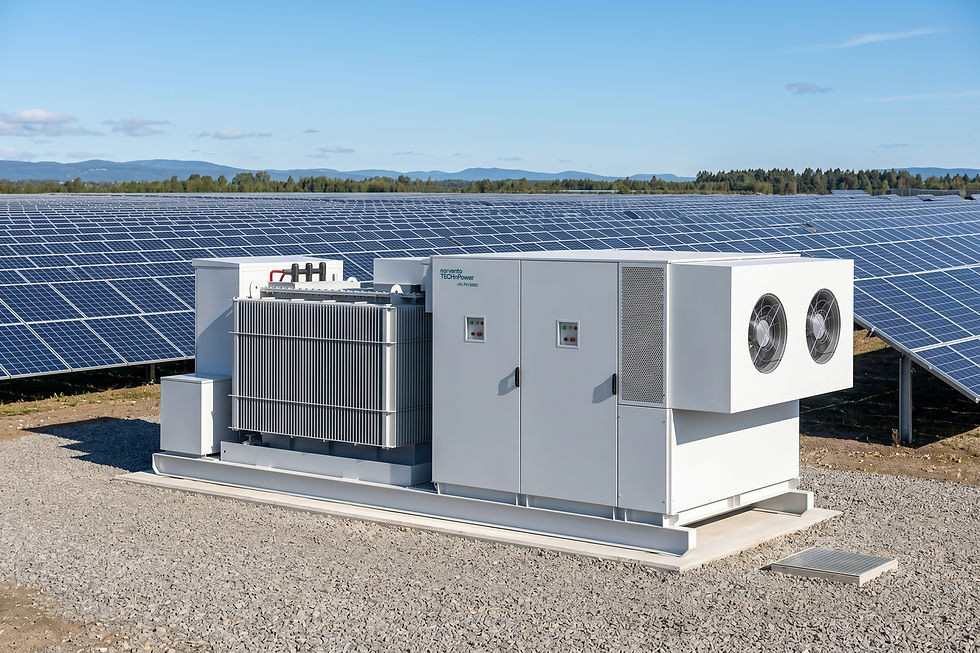
Its portfolio includes wind turbines, power electronic converters, photovoltaic inverters and battery energy storage systems, with applications ranging from commercial and industrial facilities and microgrids to large-scale renewable generation projects.
This strategy reflects an important shift beginning to take shape across different markets.
Solar panels and wind turbines remain fundamental to the decarbonization of the electricity sector. However, generating renewable electricity alone no longer represents the full complexity of the energy transition.
The infrastructure surrounding that generation is becoming equally important.
Power Electronics Moves to Center Stage
One of the technologies illustrating this new phase is the nXL PCS platform, developed by Norvento for large-scale battery energy storage projects.
The power conversion system can reach up to 9 MVA in a 20-foot configuration, using a modular architecture composed of four independent power modules.
According to the company, this architecture makes it possible to independently manage different battery inputs while increasing system redundancy and operational availability.
Norvento also reports conversion efficiency of approximately 99%, together with functionalities designed for interaction with and support of the electrical grid.

These characteristics help explain why the Power Conversion System — PCS is becoming a strategic component in large-scale energy storage projects.
In a BESS installation, batteries store energy. But it is power electronics that determines how that energy is converted and how the system interacts with the electrical grid.
Converters control the flow between direct current and alternating current and enable storage systems to respond to grid requirements.
As battery projects move toward increasingly large installations, the efficiency, availability and controllability of this equipment have a direct impact on the technical and economic performance of these projects.
Energy Storage Becomes Part of Electricity Infrastructure
Energy storage is another pillar of Norvento’s technology strategy.
The company develops nGM BESS systems, including containerized and skid-mounted solutions designed for industrial facilities, distribution grids, renewable energy plants and microgrids.
The development of these technologies illustrates how the role of batteries is changing.
An energy storage system can absorb renewable electricity when generation is abundant and subsequently return that energy to the system.
But modern BESS projects can perform additional functions, including demand management, grid support, backup power and the hybridization of renewable assets.
For electricity systems with a growing share of solar and wind generation, this flexibility is becoming increasingly important.
Rather than treating renewable generation, energy storage and electrical infrastructure as independent elements, the industry is beginning to design them as parts of a single energy system.
This is precisely where hybridization is gaining ground.
Solar, Wind and Batteries Begin to Operate as a Single System
Norvento’s technology portfolio includes solutions capable of combining renewable generation, energy storage and advanced control systems.
The company has experience developing hybrid systems and microgrids that can integrate technologies such as solar photovoltaic generation, wind power and batteries.
One example is the nED750, a wind turbine of up to 750 kW featuring direct-drive technology, developed for wind repowering applications. It can replace existing 600–750 kW wind turbines to increase energy production, extend the operating life of wind farms and optimize project CAPEX.
The turbine can operate together with photovoltaic systems, battery storage and other generation technologies, including applications involving weak electrical grids or isolated systems.
This architecture points toward a scenario in which different energy assets will become increasingly interconnected.
A solar plant does not necessarily have to operate solely as a solar power plant.
Likewise, a wind installation does not necessarily have to depend exclusively on the immediate availability of wind.
When combined with energy storage, power electronics and digital control systems, different energy sources can operate within a single energy ecosystem.
For industries, utilities and infrastructure operators, this integration can translate into greater flexibility and better utilization of existing assets.
From Galicia to a New Generation of the Energy Industry
Behind Norvento’s technology strategy lies another project that illustrates the changes taking place across the industrial supply chain of the energy transition.
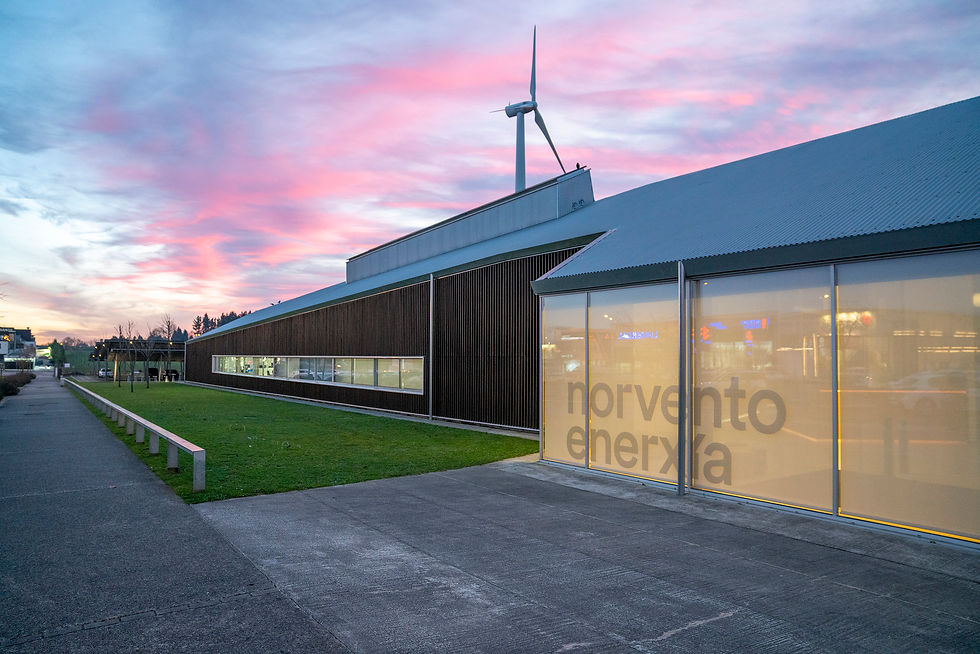
In Lugo, in the Galicia region of Spain, the company is developing the Norvento Enerxía Factory Zero — neFO, a new industrial facility designed to manufacture the different technology families developed by TECHnPower.
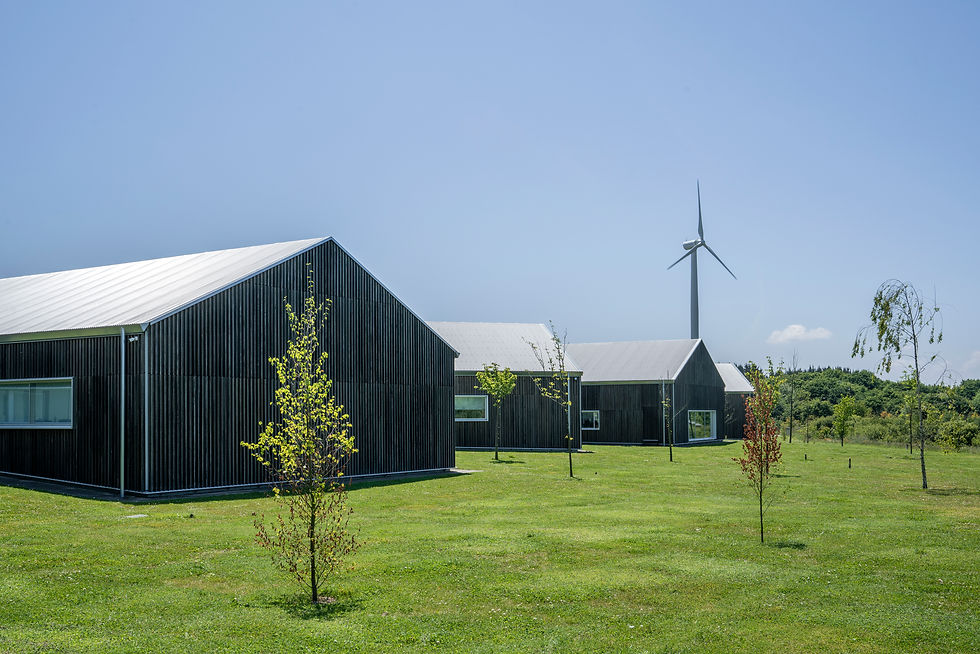
With a total investment of more than €50 million, the project received €27.5 million in support from the European Union Innovation Fund.
Norvento describes the facility as a factory designed around energy self-sufficiency and net-zero emissions, dedicated to producing technologies related to renewable generation, power conversion and energy storage.
The initiative also highlights another important debate.
As countries accelerate investments in renewable energy, industrial policy is increasingly becoming part of the broader energy discussion.
The issue is no longer only about determining where clean electricity will be generated, but also where the technologies required to sustain this transformation will be developed and manufactured.
Batteries, converters, inverters, control systems and energy management platforms are becoming strategic components of a rapidly expanding global clean energy supply chain.
Why Brazil Matters
Brazil provides a particularly relevant environment for this discussion.
The country already has one of the highest shares of renewable electricity among the world’s major economies and continues to expand its installed solar and wind generation capacity.
However, a greater penetration of these energy sources also creates new technical challenges.
How can increasing volumes of variable renewable generation be integrated into electricity grids?
How can energy produced during certain periods be shifted to times when the system needs it most?
How can industries and large consumers increase their energy autonomy without compromising security and reliability?
And what role will batteries and power electronics play in the next stage of renewable energy expansion in Brazil?
These questions are bringing energy storage, hybridization and advanced power conversion systems increasingly close to the center of Brazil’s energy debate.
This scenario also helps explain the transformation of Intersolar South America itself.
The exhibition is gradually evolving beyond being primarily a showcase for photovoltaic modules and traditional solar equipment, reflecting a much broader convergence between solar generation, energy storage, power electronics, digitalization and grid infrastructure.
A Look at the Next Phase of the Energy Transition
Norvento TECHnPower’s participation in Intersolar South America 2026 can therefore be viewed as more than simply the presence of another European technology provider in the Brazilian market.
It represents an opportunity to understand how the architecture of electricity systems itself is beginning to change.
The first major chapter in the expansion of renewable energy focused primarily on producing clean electricity at scale and at increasingly competitive costs.
The next chapter is likely to be more complex.
The question is also becoming when that energy will be used, where it will be stored, how it will be converted and how different energy resources will interact with the grid in real time.
Companies developing the technologies responsible for these interactions are therefore likely to occupy an increasingly relevant position in the transformation of the global energy sector.
From large-scale power conversion systems for batteries and BESS projects to distributed wind generation and hybrid energy systems, the technologies developed by Norvento provide a perspective on how this next stage is beginning to take shape.
EnergyChannel will follow this debate directly from Intersolar South America 2026 in São Paulo, where our team will provide special coverage with Norvento TECHnPower to explore its technologies, speak with company executives and understand the opportunities the company sees for Brazil and Latin America.
EnergyChannel | Special Coverage — Intersolar South America 2026
São Paulo | August 25–27, 2026
Norvento TECHnPower Arrives at Intersolar 2026 as Energy Storage and Hybridization Gain Momentum

Comments